Your Best Performer Has Just Been Promoted. Are They Ready to Lead?
- By Estalvis Advisors
- October 08th 2026
Your best performer has just been promoted.
They know the business. They deliver consistently. They understand the work better than most.
So promoting them into a managerial role feels like the obvious next step.
But there is one important question:
Being good at the work and being good at leading people are two different capabilities.
The transition from individual performer to manager is where many organisations need to pause and rethink what support looks like.
The First Shift: From Doing to Enabling
As an individual contributor, success is largely measured by what you accomplish yourself.
As a manager, success increasingly depends on what your team accomplishes through you.
That requires a different approach.
A new manager has to learn to:
- Delegate rather than take over
- Coach rather than simply give answers
- Set direction rather than solve every problem
- Give feedback rather than avoid difficult conversations
- Create ownership rather than remain the person everyone depends on
This sounds straightforward. In practice, it can be one of the most difficult transitions in a professional career.
The Challenge of Managing Former Peers
The person who was yesterday's colleague may suddenly become today's manager.
Relationships change. Expectations change. And sometimes, the new manager has to make decisions that may not be popular with people who were previously their peers.
The transition requires confidence without becoming authoritarian, and approachability without losing accountability.
That balance is rarely learned simply by being promoted. It needs guidance, practice and feedback.
Technical Expertise Is Only One Part of Leadership
One of the most natural reasons to promote a high performer is their strong track record.
They know the work. They deliver consistently. They have earned the trust of the organisation.
But being excellent at a role and leading others effectively require different capabilities.
A newly promoted manager may need to develop skills such as:
- Delegation
- Handling difficult conversations
- Conflict management
- Performance feedback
- Team motivation
- Prioritisation
- Communication
- Coaching and development
The promotion recognises past performance. Leadership development prepares them for future responsibility.
What Can Organisations Do Differently?
The transition should not begin after the promotion letter is issued.
Organisations can start preparing high-potential employees before they formally step into leadership.
This could include:
1. Give them opportunities to lead before giving them the title
Allowing high performers to lead projects, mentor colleagues or coordinate cross-functional initiatives can help build early leadership experience.
2. Make the expectations of the new role clear
The definition of success changes when someone becomes a manager.
They need to understand that their role is no longer simply to deliver personally, but to create an environment where others can deliver well.
3. Equip them with practical management skills
Leadership development should go beyond classroom training.
New managers need opportunities to discuss real situations, practise conversations, receive feedback and learn from experienced leaders.
4. Give them someone to learn from
A mentor, experienced manager or structured leadership forum can provide a safe space to discuss situations that may not have straightforward answers.
5. Review how they are developing as a leader
Performance discussions should look beyond individual output.
They should also consider how the manager is building the team, developing people, handling challenges and creating accountability.
A Promotion Is Not the Finish Line
Promoting a high performer into management is an important milestone.
But the promotion itself does not create a leader.
The real investment begins after the promotion.
When organisations support this transition thoughtfully, they are not only helping one employee grow. They are building a stronger team, creating a deeper leadership pipeline and reducing the risk of losing talented people simply because they were promoted without the support needed to succeed.
At Estalvis Advisors, we believe talent acquisition is only one part of the larger people lifecycle.
Hiring the right person matters. Helping them grow into their next level of responsibility matters just as much.
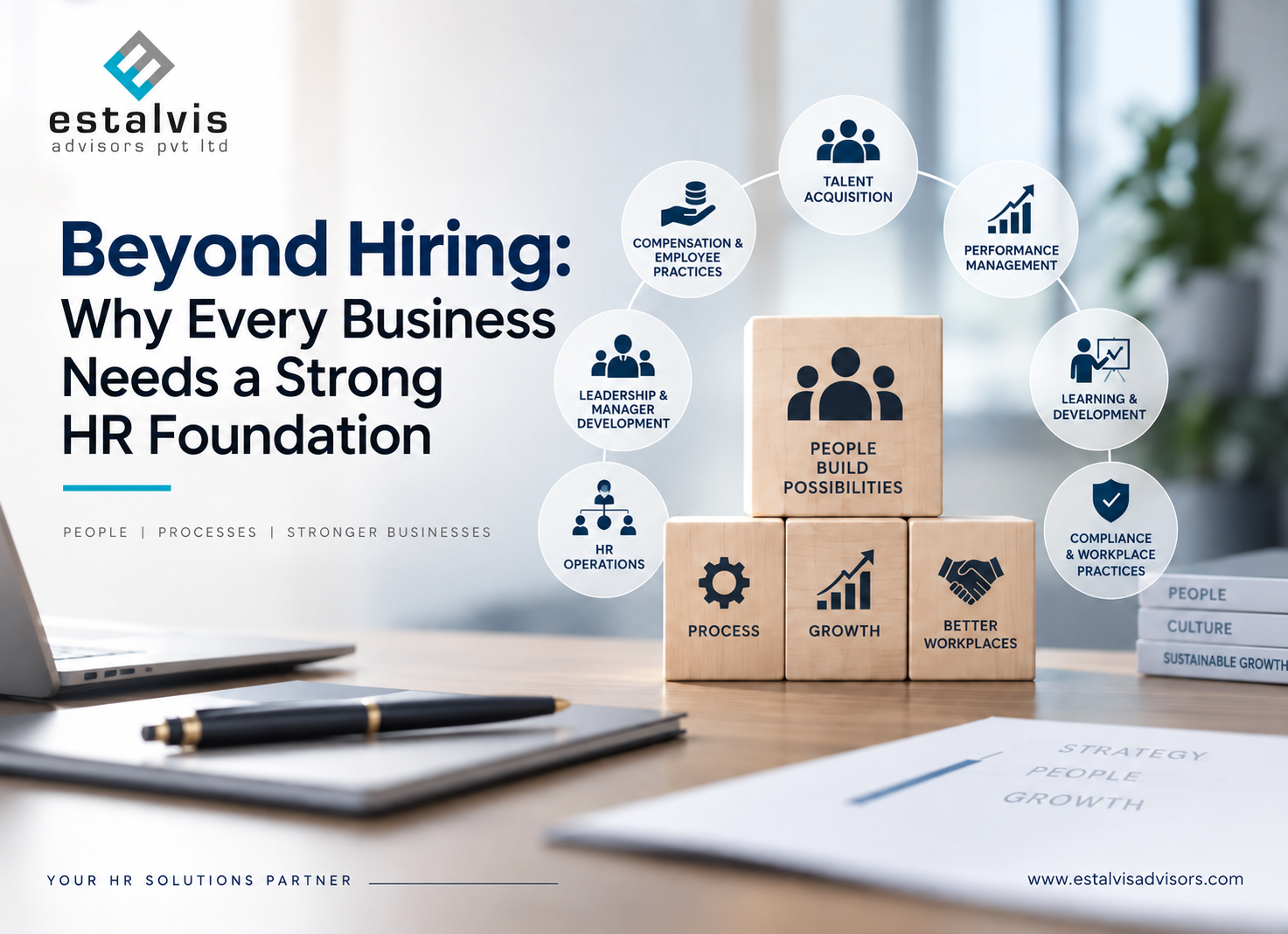
Through our HR solutions, including leadership and manager development, capability assessment and performance management, we work with organisations to build the people practices that support this journey.
Because sometimes, the question isn't whether your best performer is ready for a bigger role.
It's whether your organisation is ready to help them succeed in it.
Estalvis Advisors — Your HR Solutions Partner