Hiring a Leader Is Not Hiring an Employee
- By Estalvis Advisors
- November 16th 2026
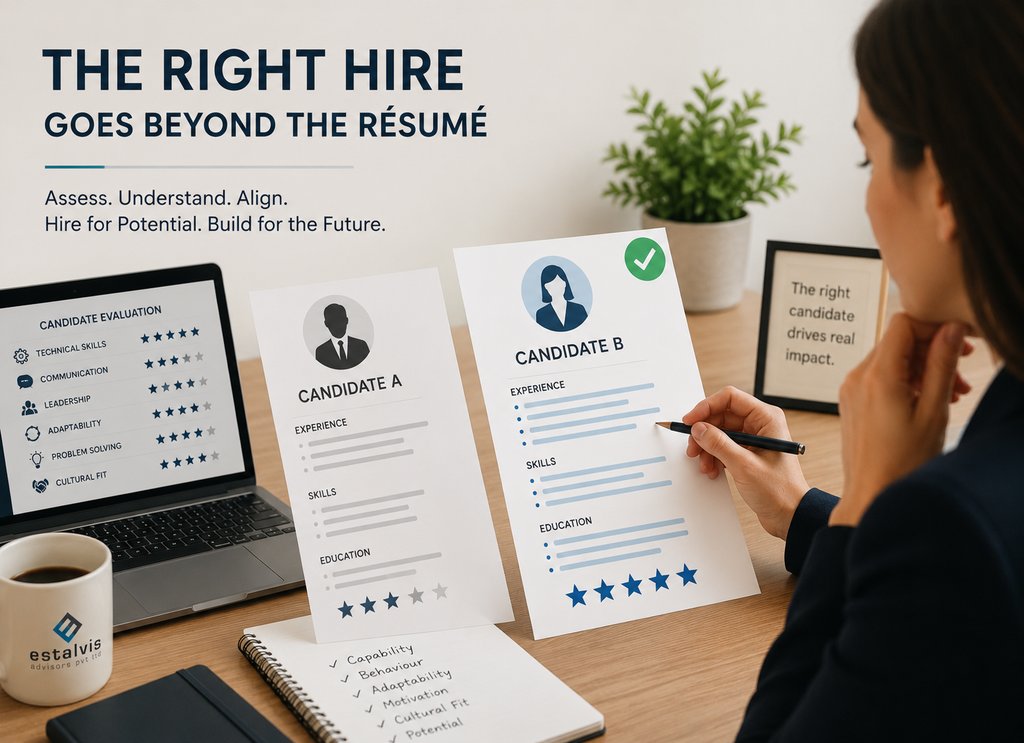
Experience, designation and an impressive CV are not enough when hiring a leader.
When a senior role opens up, many organisations follow the same process they use for every other vacancy.
Share the job description. Shortlist the most experienced profiles. Conduct a few interviews. Check references. Make the offer.
But a leadership hire carries a different weight. A wrong decision at this level does not stay with one person. It affects a team, its performance, its morale and sometimes the direction of the business.
So the question worth asking is: Are we hiring for a role, or for leadership?
A LEADER'S IMPACT IS MULTIPLIED
An individual contributor's success is largely personal. A leader's success depends on what the team achieves through them.
That changes what the organisation needs to assess.
Experience and technical depth matter, but they are only part of the picture. Leaders also need to set direction, make decisions with incomplete information, build and develop people, and handle conflict.
An impressive CV tells you what someone has done. It does not always tell you how they led others to do it.
WHERE LEADERSHIP HIRING OFTEN GOES WRONG
Several patterns repeat across organisations.
The role is unclear. The vacancy is described by designation and responsibilities, not by the outcomes the business needs in the next two to three years.
The search is too narrow. The brief asks for someone who has done exactly this job in exactly this industry, potentially ruling out strong candidates who could bring valuable perspectives and grow into the role.
Capability is assumed, not assessed. Leadership is judged by the title held and the size of the last team, rather than by how the person actually leads.
Too many voices, no shared view. Different stakeholders want different things, and the decision defaults to whoever interviewed best.
The hire is left to figure it out. The leader joins and is expected to deliver immediately, without the context, support or alignment a senior role needs.
WHAT A STRONGER APPROACH LOOKS LIKE
1. Define the outcomes first.
What should this person have achieved in 12 to 24 months? What problems must they solve? What changes or improvements will define success? Start there, not with the designation.
2. Agree the criteria with stakeholders before interviews begin.
Align on what matters most so that feedback can be compared fairly and decisions are based on shared expectations.
3. Assess leadership capability, not just experience.
Look at how candidates have built teams, handled difficult situations, developed successors and made decisions under pressure. Structured leadership interviews, supported by evidence from real situations in their previous roles, can reveal far more than a discussion of achievements alone.
4. Look at the ability to work with and influence the organisation.
A capable leader must be able to work effectively within the organisation while also having the judgement to challenge practices that need to change. The objective is not simply cultural fit, but the ability to contribute positively to the organisation's future direction.
5. Verify thoroughly.
Reference conversations and background verification matter, not less, but more at senior levels. Previous responsibilities, achievements and leadership experience should be examined carefully.
6. Plan the first 90 days before the offer is made.
Leaders need onboarding too. Who will they meet? What teams and challenges will they inherit? What decisions will they be expected to make? How will their early success be measured? A thoughtful transition plan can make a significant difference.
THE COST OF GETTING IT WRONG
A weak leadership hire rarely announces itself immediately.
It shows up as a team that slowly disengages, good people who start leaving, decisions that stall or a strategy that drifts.
By the time the problem becomes clear, the organisation may already have lost valuable time, momentum and talent. The cost of correcting the decision can be far higher than the effort invested in assessing the candidate properly at the outset.
HOW ESTALVIS APPROACHES LEADERSHIP HIRING
At Estalvis Advisors, we believe leadership hiring begins with understanding the business challenge, not merely filling a designation.
Our approach focuses on understanding the outcomes expected from the role, followed by a structured search, assessment of leadership capabilities and careful verification.
It also connects to the larger people lifecycle. Hiring the right leader matters. Providing the context, support and environment that help that leader succeed matters just as much.
Because a leadership hire is not just a new name on the organisation chart. It is a decision about how the business will be led.
Estalvis Advisors | Your HR Solutions Partner
Categories
Trending Posts
-
Strategies
Hiring a Leader Is Not Hiring an Employee